How to Make Kindergarten Settling Easier

Starting kindergarten is an exciting time for every child and parent. It’s a new place, with unfamiliar teachers, and it’s normal for parents to feel a bit uncertain and find it hard to let go. However, from my own experience, it’s much easier for the child if the mom who takes them stays positive and cheerful when dropping them off, and doesn’t start crying along with them (I know, it’s hard!). This small thing makes a huge difference during those first few days. Your child is in good hands at kindergarten, and it’s truly beneficial for them — they gain so many new experiences, make friends, and learn things they’ll proudly show at home later.

Before kindergarten started, we began giving our daughter vitamin C for a few weeks to help strengthen her immune system. It really helped us get through the first months more easily, when kids tend to catch small infections more often.


1. Preparing at Home

Start by introducing what kindergarten will be like in a playful way. Talk about the teachers, the toys, and the new friends they’ll meet.
You can even practice a “kindergarten day” at home — greetings, playtime, singing rhymes — it helps the child know what to expect.

If kindergarten starts earlier than usual, try waking your child a little earlier a few days before, so they can get used to the new morning routine.


2. Gradual Adaptation

There’s no need for your child to spend full days right away. It’s better to start with shorter visits and slowly increase the time they spend there.
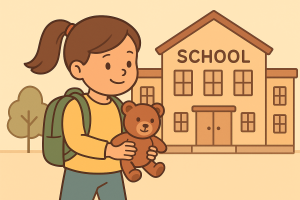
If your child can bring a favorite plush toy or comfort item from home, it can really help them feel safe and secure — especially during nap time.


3. Positive Goodbyes

Saying goodbye is often the hardest part. It’s so important for moms or dads to stay calm, smile, and encourage their child when they go in.
During the first few days, my daughter’s dad was the one who took her because he’s more confident and less emotional — and thankfully, she adapted quite quickly.
Don’t panic if your child cries when you leave. I know it’s hard to walk away like that, but it’s a natural reaction — and usually, they calm down within minutes once they’re inside with the group.


4. Communication with the Kindergarten

Most kindergartens have an open day before the year starts, where parents and children can meet the teachers and other families.
It’s good to speak openly with the teachers — share your child’s eating or sleeping habits, or any fears they might have.
Usually, there’s also a parent meeting during the first week, where they explain the weekly schedule and the upcoming activities for the year.


5. Play and Making Friends

Play is one of the best ways for children to adjust and make friends. Group games reduce anxiety and help develop social skills.
At home, you can play simple role-playing games that teach social rules or conflict resolution.
And don’t forget to praise your child for every little success — whether it’s making a new friend or joining in a group activity.
Our daughter loves to come home and recite the rhymes and poems she’s learned at kindergarten — it’s always the highlight of our evenings!


6. Patience

Every child adjusts differently to new environments. Avoid comparing them to others, and watch for signs — if your child cries too much, becomes withdrawn, or has trouble sleeping, they might just need a bit more time.
A predictable daily routine at home helps them feel safe and grounded.
Our mornings can be challenging — she often doesn’t feel like getting dressed or brushing her teeth — but turning it into a game or race works wonders. We compete to see who gets to the bathroom or gets dressed faster. It’s much easier than nagging or arguing, and it starts the day on a happy note.


Summary

Starting kindergarten is a big milestone for every family. Gradual adaptation, comfort items from home, play, open communication with teachers, patience, praise, and lots of talking all help make the transition smoother.
From experience, I can say that it’s so much easier for the child when the parent is calm, confident, and cheerful at drop-off. With a little positivity and consistency, your child will soon feel happy and safe at kindergarten — and you’ll both enjoy this new chapter together.


Advertisement
5 Healthy and Easy Breakfasts for Kids
Breakfast is the most important meal of the day, especially for kidsA good breakfast not only gives energy for the day but also helps with concentration at daycare or school. I know mornings can be hectic, so quick, healthy, and tasty ideas that kids actually enjoy are always welcome. Here are some tips that always work for us! 1. Banana Pancakes – Only 3 Ingredients Why it’s good:Bananas are naturally sweet, full of potassium and fiber, and give energy for the morning. Mini pancakes are always a favorite with kids. Ingredients (makes about 6 mini pancakes): 1 ripe banana 2 eggs 3 tablespoons rolled oats Instructions: Mash the banana with a fork. Mix in the eggs and oats. Cook small rounds in a skillet with a little coconut oil. My daughter loves them drizzled with honey and a few pieces of fruit – a real vitamin boost! 2. Honey Oatmeal with Fruit Why it’s good:Oats provide slow-digesting carbohydrates for lasting fullness. Fruit adds vitamins, and honey is a natural sweetener. Ingredients (1 serving): 5 tablespoons small oats 200 ml milk or plant-based milk 1 teaspoon honey Fresh fruit (apple, pear, berries, banana) Instructions: Cook the oats in milk for 5 minutes until soft. Sweeten with honey. Top with chopped fresh fruit. Tip: You can also prepare it the night before and store it in the fridge as “overnight oats.” No need to cook – just mix oats, milk, and honey. By morning, it’s ready. 3. Egg Muffins – Colorful and Filling Why it’s good:Eggs are a great source of protein, and muffin shapes make breakfast fun for kids. They can be made ahead and quickly reheated in the morning. Ingredients (6 muffins): 4 eggs 50 g grated cheese ½ bell pepper ½ zucchini Salt and pepper Instructions: Chop the vegetables (you can use whatever you like). Mix with the eggs and cheese. Divide into muffin cups and bake at 180°C (350°F) for about 15 minutes. Tip: If your child isn’t a fan of vegetables, start with a little and gradually increase. 4. Fruit Yogurt Parfait Why it’s good:Light, creamy, and very versatile. Plain yogurt contains probiotics, which are good for digestion. Ingredients: 150 g plain yogurt 1 tablespoon homemade granola or oats Fruit (strawberries, raspberries, banana) Instructions:Layer yogurt, fruit, and granola in a glass. Done! 5. Whole-Grain Sandwiches with Tasty Spreads Why it’s good:Whole-grain bread has more fiber, is quick to prepare, and can be flavored in many ways. Ideas for sandwich spreads: Avocado & Tomato Spread: ½ ripe avocado 2–3 cherry tomatoes ½ teaspoon lemon juice Pinch of salt and pepper Instructions: Mash the avocado with a fork. Dice the tomatoes and mix in. Season with lemon juice, salt, and pepper. Spread on bread. Cottage Cheese Spread with Herbs: 50 g cottage cheese 1 tablespoon plain yogurt Finely chopped parsley or chives Pinch of salt Instructions: Mix the cottage cheese with yogurt until creamy. Add herbs and salt. Spread on bread and serve with fresh vegetables. Hummus with Carrot: 3 tablespoons hummus 1 small carrot, grated or cut into thin sticks Instructions: Spread hummus on bread. Top with grated carrot. For extra crunch, you can add cucumber or bell pepper. Practical Breakfast Tips: Prep ahead: Save time by preparing ingredients in advance (e.g., oatmeal, chopped fruit). Small portions: Kids are more likely to eat if served in small, colorful bowls or bite-sized portions. Colors and shapes: Cookie cutters (hearts, stars) make food more playful. Get kids involved: Let children help in the kitchen – it makes them more excited to eat what they’ve made. Summary:With just a few simple ingredients, you can make quick, tasty, and nutritious meals. Banana pancakes, honey oatmeal, egg muffins, and colorful sandwich spreads are not only delicious but can be varied every day. And don’t feel guilty if sometimes you just grab something quick from the bakery – it happens to everyone. For us, banana pancakes are usually a weekend treat when there’s time to enjoy them slowly, even if the honey makes a bit of a sticky mess!.
The World of Tales – Why We Love Fairy Tales So Much
Fairy tales and animated stories have been an inseparable part of childhood for generations. From classic bedtime stories passed down through families to colorful modern animations, these tales bring joy, comfort, and important lessons to audiences of all ages. But what makes these stories so enduring and special, even in today’s fast-paced world? First of all, fairy tales are simple yet meaningful. They use clear characters and magical adventures to convey lessons about life. A brave hero, a clever animal, or a magical helper teaches children about friendship, kindness, courage, and the difference between right and wrong. Unlike more complicated stories, the messages in fairy tales are easy for young minds to grasp, helping children learn moral values in a gentle, entertaining way. For example, in stories where the underdog succeeds through clever thinking or bravery, children see that perseverance and honesty are rewarded, which can inspire them to apply these lessons in their own lives. Fairy tales also play a powerful role in developing imagination. Listening to or watching a story allows a child to step into entirely new worlds. They might become a dragon rider, a princess, or an explorer of enchanted forests. This kind of imaginative play is more than just fun—it encourages problem-solving, creative thinking, and empathy. When children imagine themselves in different roles or see characters facing challenges, they learn to approach situations from multiple perspectives. Over time, this can improve their social skills and boost confidence, helping them navigate real-life situations more effectively. Another reason fairy tales are so beloved is the sense of security they provide. Even when challenges and dangers appear, most stories have a reassuring resolution. A happy ending shows that difficulties can be overcome, and that justice and kindness matter. This sense of safety is especially important for young children, who are still learning to understand the world around them. Shared storytelling experiences, such as reading a tale together or watching an animated story, also strengthen family bonds. Parents and children can discuss characters’ choices, solve story-related puzzles together, or even act out scenes, creating meaningful conversations and memories. Fairy tales can also help children deal with emotions. By seeing characters face fears, frustrations, or sadness, children learn that it’s normal to experience these feelings and that there are ways to cope. The stories provide a framework for understanding complex emotions and teach that problems can be solved with patience, cleverness, or support from friends and family. For example, a tale about a lost child finding their way home not only entertains but also gently reassures a child that feeling scared is temporary and manageable. In addition, fairy tales encourage a love of reading and storytelling. When children are captivated by a story, they naturally want to explore more, ask questions, or create their own narratives. This develops literacy skills and nurtures curiosity. Over time, these early experiences can inspire lifelong learning and a habit of reading for pleasure. Parents and educators often notice that children exposed to rich storytelling are more imaginative, expressive, and confident in their communication. Finally, fairy tales offer a little island of calm in a busy, noisy world. They allow children to slow down, dream, and reflect, which is increasingly important in today’s digital age. Even adults benefit from revisiting these stories, as they recall the magic of childhood and the simple yet powerful values that have shaped us. Fairy tales are not just entertainment—they are timeless companions that teach, comfort, and inspire. In conclusion, the world of fairy tales is far more than a collection of entertaining stories. They teach morals, spark creativity, provide emotional security, and create shared experiences between generations. Whether read aloud at bedtime, watched as an animation, or retold in imaginative play, these tales continue to enrich childhood and remind all of us of the magic of imagination, courage, and kindness.  
Safe Every Step: A Parent’s Guide to Protecting Your Baby at Home
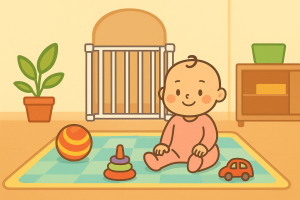
Home Safety for Little Ones – Tips from the Heart, Based on Experience When a baby arrives, everything changes. In an instant, you start seeing your home with completely new eyes: what used to seem harmless suddenly looks full of hidden dangers. The edge of the coffee table, the power outlet, the hanging tablecloth – all those little things you never noticed before. A child’s curiosity is endless, and that’s a wonderful thing, because it’s how they discover the world. But for a parent, every new discovery can make your heart skip a beat as you try to keep them safe. One of the first and most important things is to create a safe, designated play area where your little one can explore freely. It could be a corner of the living room, a well-organized nursery, or just a small section of the apartment. Use a thick, soft play mat, pillows, and age-appropriate toys – anything they can safely touch, throw, or chew on. Always use outlet covers, corner protectors on furniture, and non-slip pads under small rugs. Stable furniture is essential, because babies quickly start pulling themselves up, and it’s important that they have something safe to hold onto. Tablecloths and dangling cords, on the other hand, are better tucked away so they don’t pull anything down on themselves. Anything dangerous should be put away early on. Medicines, cleaning products, sharp objects, small or breakable items should all be stored high up or in locked cupboards. Childproof locks on drawers and cabinet doors are worth installing, because curiosity knows no limits – if it’s reachable, your child will try to reach it. A great trick is to inspect your home from your child’s point of view: crouch down and look around from their height. You’ll be surprised by how many things suddenly look exciting – and accessible. Many families find baby gates or playpens helpful. Some parents worry they feel too restrictive, but in reality, they can be a lifesaver. In our home, the kitchen became a particularly dangerous zone when I was cooking – a hot oven, steaming pots, and plenty of fascinating “no-touch” objects. So I’d simply put my little one in the playpen, bring a few favorite toys, and while I cooked, they happily played in their own little world. It gave us both peace of mind – they were safe, and I could focus without constant worry. Later, when my baby started learning to stand, the playpen took on a new role. They held onto the sides, practiced balancing, and took their first little steps safely inside it. It was such a joy to watch them grow without fearing a fall or a toppled chair. Those everyday moments really taught me how much difference a well-thought-out, safe space can make. Houseplants also become something to reconsider once your baby starts crawling and exploring. Many common plants look beautiful but can be poisonous if a child chews on the leaves. Poinsettia, oleander, ficus, croton, philodendron, and dieffenbachia are just a few examples. It’s best to place those high up or switch to non-toxic plants like ferns, spider plants, or snake plants. Potting soil is another irresistible thing for babies – they love to dig and scatter it everywhere. It’s safest to move the plants out of reach for a while or secure them so they can’t be knocked over. As your baby starts pulling up and learning to walk, a new stage begins. Watching their motor skills develop is amazing but also a bit nerve-racking. Make sure anything they hold onto is sturdy and won’t tip over easily. Put lightweight chairs, small tables, and rolling furniture away for now. It’s also a good idea to fix shelves to the wall, use soft silicone corner guards, and move heavy objects lower down so nothing can fall on them. And if they do fall – don’t panic. Soft rugs, padded play mats, and safe play areas make a huge difference. Hygiene is also part of safety. Babies touch everything and often put their toys in their mouths. It’s important to clean and disinfect toys regularly – no need to overdo it, but consistency matters. Make handwashing a daily habit, especially after playing with dirt, water, or modeling clay. Always store cleaning products out of reach, and whenever possible, choose natural alternatives like vinegar or baking soda – they’re gentle but effective. Many brands now offer baby-safe cleaning products too, which makes things even easier. As your child grows, simple rules become just as important as physical safety. Short, clear, consistent boundaries help them understand limits. For example, in our home, we have a rule: “You can only go into the kitchen with Mom.” When they were younger and couldn’t understand that yet, I used a baby gate to keep them out. Children thrive on consistency – if your reactions are predictable, they quickly learn what to expect. Praise, patience, and consistency go much further than constant “no’s” – that’s how real security is built. There’s no such thing as a perfectly safe home – there will always be something you forget or didn’t think about. But with love and mindfulness, you can create a space where your child can grow safely. The goal isn’t to protect them from everything, but to teach them how to explore the world safely. A few clever safety tools, a bit of awareness, and a lot of patience – that’s all it takes for everyday life to feel calmer and for exploration to remain joyful.
The Easiest and Most Fun Ways to Learn Colors!
Colors surround us every day, and for kids, the best way to explore them is through playful learning. Getting to know colors isn’t just fun—it also helps develop attention, focus, and creativity. In this post, we’ve gathered some super simple and fun activities that you can easily do at home. Color Sorting Game Let’s start with a classic but always effective game: sorting objects by color! Gather all kinds of little things from around the house—Legos, bottle caps, plush toys, hair clips—and let’s “colorize” together. The task is simple: “Put the red ones here, the blue ones there!” While playing, kids not only learn colors but also practice organizing, noticing details, and paying attention. This game is perfect for color recognition, fine motor skills, and creating quality parent-child moments. Color Hunt Around the House If a lazy afternoon feels a little boring, a color hunt can bring it to life! You can say: “Come on, let’s find something yellow!”—and your child will happily run to find it. “Got it! The pillow is yellow!”—they’ll proudly show you. It’s simple, yet full of movement, learning, and laughter. Add a little music, and it gets even more exciting: when the music stops, they have to find a new color. This game is not only fun but also helps develop focus and reaction time. Colorful Snack Time Colors aren’t just for play—they can also brighten up snack time! A little red apple, orange carrot, green cucumber—and suddenly your plate is a rainbow. While eating together, talk about the colors: “What color is this pepper?” — “Red!” — they’ll say proudly, smiling. Mealtime becomes not only tasty but also a moment for learning and quality bonding. Playing with Colored Clay Clay is pure magic! Little hands work, minds think, and kids learn what red, blue, and yellow are. For us, clay time is always a mini adventure: “Let’s make a blue fish, a red apple, a green snake!” And when we mix two colors, surprise! “Look, Mom, it turned orange!” Those moments are priceless   Rainbow Painting and Drawing This is one of our favorites! There’s nothing more joyful than painting a big rainbow together. All you need are some colored pencils, watercolor paints, or crayons, and the magic begins. Draw clouds, sun, raindrops, and name the colors as you go: “Here comes the red stripe, then orange, then yellow…” Kids love seeing the colors come alive and learn the order of the rainbow at the same time. Mixing Colors Once kids know the basic colors, try mixing them to discover new shades! For example: red + yellow = orange, blue + yellow = green. This is not only educational but also an exciting experiment for little explorers. Colorful Walks and Discoveries Beyond indoor play, you can turn walks into a color-learning adventure too. Point out colors on plants, flowers, and objects, and ask your child to name them. This helps develop observation skills, vocabulary, and speech while combining movement and fresh air for a healthy and happy experience. Tips for Playful Color Learnin•Repetition: Kids learn more easily when they encounter the same color multiple times.• Everyday connection: Colors in clothes, toys, and food help reinforce learning.• Praise: Little compliments motivate children and boost their confidence.• Creative challenges: Drawing, painting, and clay play with different colors make learning fun!
Teaching Emotions Through Play: How Games Help Children Develop Emotional Skills
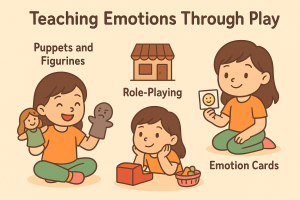
Recognizing and expressing emotions is such an important skill for children. Even from a young age, it has a big impact on how they handle relationships, communicate, and solve problems. But many kids find it hard to put their feelings into words, especially when emotions are strong or complicated. Play is a perfect, natural, and fun way for children to explore their feelings and practice expressing them. Puppets and Figurines: Learning Through Play Puppets or small figurines are great tools to help kids recognize emotions. You don’t need actual puppets – plush toys or little figures work perfectly too. For example: A puppet can be angry, sad, or happy. Kids can observe and name the emotion without having to express their own feelings directly. This is especially helpful for shy or hesitant children. Puppetry also develops imagination, creativity, and speaking skills. Tip: Ask your child to create stories with the figures that involve emotions. You can ask, “How does your puppet feel now?” – this encourages reflection in a playful way. Role-Playing: Experiencing Emotions Role-playing lets kids step into different situations, real or imaginary. For example, during a “store” or “doctor’s office” game, they might experience: Waiting or feeling disappointed Joy and excitement Frustration or sadness Role-play helps children notice how others react to emotions and practice expressing their own feelings in a safe space. It also develops social skills, empathy, and problem-solving. Tip: Rotate roles often so your child can explore different perspectives and emotions. Emotion Cards: Words and Faces Emotion cards are a fun way to help children put feelings into words. Cards can include: Facial expressions Emotion words or moods Situational prompts Activity ideas: Act out the emotion shown on the card Guess how another child is feeling based on their expression Talk about situations that can trigger similar feelings Tip: Celebrate all attempts to express emotions, even if they’re not perfect! If you also share how you feel – happy, sad, or frustrated – your child can better recognize and understand other people’s reactions. Everyday Emotional Play Emotional learning doesn’t have to be a special activity. You can include it in daily life: Morning play: Start the day with a short puppet skit or role-play. Family time: Play simple emotion games during meals or car rides. Story-based play: After reading a story, ask how the characters might feel and act it out. Short, regular, fun activities help develop emotional intelligence and strengthen family bonds.  
From Kindergarten to School: How to Make the Transition Easier for Children
From Kindergarten to School Starting school is a huge milestone in every child’s life – and let’s be honest, for us parents too. We often feel just as nervous as they do: proud, emotional, and maybe a little anxious. We want them to feel happy, to make friends, to enjoy going to school every single day. But don’t worry – with a bit of patience, attention, and lots of love, this transition can become a truly beautiful experience for both of you. 🌱 Why Can This Period Be Challenging? Kindergarten is a warm, playful, and familiar world. Children get used to their group room, the teachers, and their friends.School, on the other hand, is a bit more structured: there are more rules, lessons require longer attention, and everything feels new. For some children, this change can bring anxiety, tiredness, or shyness. That’s why it’s so important for parents to stay patient and avoid rushing the adjustment process. Every child has their own rhythm – it’s worth respecting that. 💬 How Can You Help Your Child Prepare? 1. Talk a Lot About School Tell them what a school day will look like, what they’ll learn, and who their teachers might be. You can read picture books or watch short stories about starting school together.Sharing your own school memories – funny or touching moments – helps them understand that everyone feels a little nervous at first. 2. Get Used to the New Routine Gradually A few weeks before school starts, begin practicing morning routines and waking up a bit earlier.You can also support focus through short, calm activities at home like drawing together, watching a story, or playing a board game.A predictable daily rhythm helps children feel safe and confident. 3. Encourage Independence Practice packing the school bag together, getting dressed, or washing up.Give them small choices like: “Which snack would you like to take today?”These little moments of success build confidence and make new challenges feel less scary. 4. Get to Know the School If possible, visit the school before the first day. It helps so much if your child has already seen the classroom, met the teacher, or recognized a few future classmates.Open days and meet-the-teacher events are wonderful opportunities for this. 5. Support Friendships If your child already knows one or two classmates, walking into school will be much easier.Before the school year starts, try to arrange playdates or playground meetups.Familiar faces always make the first days feel safer. 💖 The Parent’s Role in the First Weeks The most important thing is that your child feels you believe in them.When you stay calm and speak positively about school, they’ll feel that same confidence. Ask each day how they felt, what they enjoyed, and what was hard.Even if they don’t talk much, knowing that you’re there to listen makes a huge difference. Having a regular routine also helps a lot – especially in those first, more tiring weeks.Patience and understanding are truly the greatest gifts you can give your child right now. 🏫 How Can the School Help? Many schools today pay special attention to making the first days easier.Some organize playful welcome activities, others use a “buddy system” so that younger children feel supported by older ones.It’s worth asking about these programs – they can make the transition much smoother. 🌈 In Summary Starting school is a new chapter not only for your child but for you as a parent as well.It’s perfectly normal to feel a mix of emotions – joy, excitement, and worry all at once.But with love, patience, and trust, the beginning of school can become a truly happy and memorable time for both of you. The most important thing your child needs to know is this:👉 They’re not alone — you’re there, and you believe in them.
What Should Children Learn at Different Ages? – A Parent’s Guide
Is my child where they should be? When do they start counting? When do they recognize the letters? Every child develops at their own pace. The things I collected here are only approximate, there’s no need to worry if someone starts earlier or later — it’s completely normal. Around 1 year old: The first big steps During this period, babies go through huge development. They learn to roll over, crawl, climb, and then pull themselves up while holding on. The first uncertain steps also appear around this time.They start saying their first words like “mama” or “dada,” and use gestures to show what they want.They are very interested in sounds, lights, and everything that moves. They love when people talk to them, tell them stories, and they pay more and more attention to familiar faces and voices. 1–2 years old: The explorer phase Walking becomes more confident, the child tries to run, climb, and go up and down small play structures. They are constantly on the move, want to touch and try everything.Speech develops rapidly: they know more and more words and sometimes already say two-word sentences (“mommy comes”, “don’t want”).They start to imitate: feeding the doll, sweeping, cooking — as if copying the adult world.The “no” phase also appears, when they start testing boundaries and want to be more and more independent. 2–3 years old: Little talkers and big independence During this period, children can already run, jump, throw a ball, and like to eat or dress on their own. Their fine motor skills also improve: they draw, scribble, and build.Speech becomes much more complete: they communicate in simple sentences, ask questions (“What’s this?”, “Where is it?”), and start repeating songs, short poems, and rhymes.They become more interested in other children, start playing together, and learn to share and wait for their turn.At this age, children are already real little personalities – curious, funny, and full of energy. 3–4 years old: The first discoveries At this age, children start to show interest in colors and shapes. They often already count to five, though this is more like singing or play than real number understanding. They recognize some letters, especially those from their own name.Simple structured games – like puzzles or matching activities – bring them great joy. At this age they absorb everything easily, and they start kindergarten where they also learn many fun and useful things. 5–6 years old: Getting ready for school By now they can usually count to ten and start to feel what numbers really mean.They begin copying letters, scribbling their names, and their hand–eye coordination improves.They enjoy games where they can put letters in order or follow lines. There are many kinds of activity books available where they learn to draw lines and shapes — it’s worth starting these at this age to make learning letters even smoother once they start school. 6–7 years old: School starters In first grade, they learn all the letters and begin to read short words and sentences. They count to twenty and already practice simple addition and subtraction.They like games that involve organizing, sequencing, or paying attention to small details.This is a great time to start family board game nights, which are exciting family activities and also great for learning. 7–8 years old: Becoming more independent By this age, children read more confidently and start getting familiar with multiplication. They enjoy logical and thinking games and love challenges.They are no longer only motivated by winning, but also by the joy of solving problems itself. 8–9 years old: Little explorers At this stage, children can already read short stories independently, practice multiplication tables, and get to know division.They become more and more curious about how the world works and ask endless questions.Puzzles, strategy, and logic games become their real favorites — they give both challenge and a sense of achievement.
DIY Play-Doh and Creative Crafts for Kids
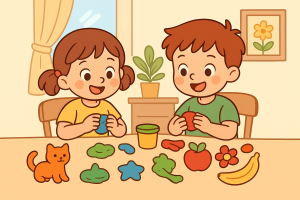
Encouraging kids to explore their creativity is always exciting, and Play-Doh (or any modeling clay) is one of the best tools for that. Playing with clay is not only fun, but it also helps develop fine motor skills, color recognition, and imagination. In this post, you’ll find plenty of simple ideas for making Play-Doh figures together, as well as other creative crafts at home. At the end, there’s even an easy homemade Play-Doh recipe! Why Play-Doh is great for kids Playing with clay has many benefits: Fine motor skills: Little fingers get stronger and more dexterous while shaping and molding. Color recognition: Using different colors helps kids learn them and see how they mix. (In our case, every batch usually ends up as one big brown blob because our little one loves mixing all the colors together!) Imagination and creativity: They can make animals, fruits, or favorite characters and invent their own stories around them. Learning through play: Kids can count, sort by color, shape, or size, all while having fun. Simple Play-Doh figures to start with If you’re just beginning, it’s best to start with easy figures: AnimalsTry small animals like a worm or snail at first. With simple templates and a little parental help, almost anything can be made.Use different colors to separate body parts.These figures are perfect for storytelling, letting kids invent their own little animal adventures. Fruits and vegetablesMake apples, bananas, carrots, or broccoli.Talk about colors, sizes, and shapes while shaping them.This is a playful way for kids to learn about healthy foods. Favorite charactersCreate figures from popular cartoons or shows, like Masha or SpongeBob (there’s even a video tutorial on the site).Kids love making their own versions of their favorite characters.These figures are great for pretend play or just creative fun. Creative crafts at home You can combine Play-Doh activities with other crafts: Mini worldsBuild a zoo, garden, or seaside scene for your figures.Use cardboard, paper, ribbons, or buttons for decoration. Lego pieces work too if you don’t mind mixing toys. Decoration and creative extrasOnce the figures are done, decorate them with paper, ribbons, or small craft materials.Kids can experiment with colors and textures, which boosts their creativity even more. Learning through playCount the figures together or group them by color, shape, or size.It’s a fun way to introduce basic math and logic skills. How to make Play-Doh even more fun Challenges and competitions: Who can make a figure the fastest or most creatively? Themed days: Animal day, fruit day, or favorite character day. Family involvement: Parents can join in, making it a shared experience. Photography and video: Take photos or record videos of the creations—it can motivate kids even more. Tips for parents Safety: Make sure kids don’t put the clay in their mouths. Easy cleanup: Use a tray or mat to keep the play area tidy. Extra fun: If you have Play-Doh sets that come with molds and accessories, the play becomes even more engaging. We have an edible cookie monster figure (check the videos), and when other kids visit, this usually keeps them busy. They get to be creative and “feed” the monster together. Homemade Play-Doh recipe (4 ingredients) 250 g flour 130 g salt 1 tablespoon oil 300 ml water Mix the ingredients and cook while stirring continuously. Don’t worry if it seems sticky or lumpy at first—once it cools and you knead it, the texture will be perfect. Divide into 4 portions and add food coloring, cocoa powder (for brown), or turmeric (for yellow) while kneading. Once completely cooled, it won’t stick to the kids’ hands. Wearing gloves during coloring is recommended.