Healthy Habits
5 Healthy and Easy Breakfasts for Kids
Breakfast is the most important meal of the day, especially for kidsA good breakfast not only gives energy for the day but also helps with concentration at daycare or school. I know mornings can be hectic, so quick, healthy, and tasty ideas that kids actually enjoy are always welcome. Here are some tips that always work for us! 1. Banana Pancakes – Only 3 Ingredients Why it’s good:Bananas are naturally sweet, full of potassium and fiber, and give energy for the morning. Mini pancakes are always a favorite with kids. Ingredients (makes about 6 mini pancakes): 1 ripe banana 2 eggs 3 tablespoons rolled oats Instructions: Mash the banana with a fork. Mix in the eggs and oats. Cook small rounds in a skillet with a little coconut oil. My daughter loves them drizzled with honey and a few pieces of fruit – a real vitamin boost! 2. Honey Oatmeal with Fruit Why it’s good:Oats provide slow-digesting carbohydrates for lasting fullness. Fruit adds vitamins, and honey is a natural sweetener. Ingredients (1 serving): 5 tablespoons small oats 200 ml milk or plant-based milk 1 teaspoon honey Fresh fruit (apple, pear, berries, banana) Instructions: Cook the oats in milk for 5 minutes until soft. Sweeten with honey. Top with chopped fresh fruit. Tip: You can also prepare it the night before and store it in the fridge as “overnight oats.” No need to cook – just mix oats, milk, and honey. By morning, it’s ready. 3. Egg Muffins – Colorful and Filling Why it’s good:Eggs are a great source of protein, and muffin shapes make breakfast fun for kids. They can be made ahead and quickly reheated in the morning. Ingredients (6 muffins): 4 eggs 50 g grated cheese ½ bell pepper ½ zucchini Salt and pepper Instructions: Chop the vegetables (you can use whatever you like). Mix with the eggs and cheese. Divide into muffin cups and bake at 180°C (350°F) for about 15 minutes. Tip: If your child isn’t a fan of vegetables, start with a little and gradually increase. 4. Fruit Yogurt Parfait Why it’s good:Light, creamy, and very versatile. Plain yogurt contains probiotics, which are good for digestion. Ingredients: 150 g plain yogurt 1 tablespoon homemade granola or oats Fruit (strawberries, raspberries, banana) Instructions:Layer yogurt, fruit, and granola in a glass. Done! 5. Whole-Grain Sandwiches with Tasty Spreads Why it’s good:Whole-grain bread has more fiber, is quick to prepare, and can be flavored in many ways. Ideas for sandwich spreads: Avocado & Tomato Spread: ½ ripe avocado 2–3 cherry tomatoes ½ teaspoon lemon juice Pinch of salt and pepper Instructions: Mash the avocado with a fork. Dice the tomatoes and mix in. Season with lemon juice, salt, and pepper. Spread on bread. Cottage Cheese Spread with Herbs: 50 g cottage cheese 1 tablespoon plain yogurt Finely chopped parsley or chives Pinch of salt Instructions: Mix the cottage cheese with yogurt until creamy. Add herbs and salt. Spread on bread and serve with fresh vegetables. Hummus with Carrot: 3 tablespoons hummus 1 small carrot, grated or cut into thin sticks Instructions: Spread hummus on bread. Top with grated carrot. For extra crunch, you can add cucumber or bell pepper. Practical Breakfast Tips: Prep ahead: Save time by preparing ingredients in advance (e.g., oatmeal, chopped fruit). Small portions: Kids are more likely to eat if served in small, colorful bowls or bite-sized portions. Colors and shapes: Cookie cutters (hearts, stars) make food more playful. Get kids involved: Let children help in the kitchen – it makes them more excited to eat what they’ve made. Summary:With just a few simple ingredients, you can make quick, tasty, and nutritious meals. Banana pancakes, honey oatmeal, egg muffins, and colorful sandwich spreads are not only delicious but can be varied every day. And don’t feel guilty if sometimes you just grab something quick from the bakery – it happens to everyone. For us, banana pancakes are usually a weekend treat when there’s time to enjoy them slowly, even if the honey makes a bit of a sticky mess!.
Healthy Habits, Useful tips
Creative Indoor Activities for Rainy Days – How to Keep Kids Engaged at Home
Rainy days can be a bit tricky for parents, as kids can’t run around outside, play freely, or explore nature. But no worries – it’s totally possible to organize fun, creative, and educational activities at home that keep little ones busy. Here are some simple yet awesome indoor ideas to make sure rainy days are anything but boring. 1. Arts and Crafts – Colors, Shapes, and Creativity Arts and crafts are one of the best ways to keep kids busy at home while boosting their creativity and fine motor skills. Ideas: Papier-mâché figures: Use old newspapers, flour, and water to make small figures. Coloring and painting: Try finger painting, watercolors, or colored pencils. Clay or salt-dough modeling: Shape, build, and create little sculptures. (You can find ideas and clay recipes on the Playdoh blog. Through arts and crafts, kids learn how to use materials creatively, follow steps, and visually express their ideas. 2. Dance and Movement – Burning Off Energy at Home Movement is super important, especially when outdoor play isn’t an option. Dance and creative movement are not only fun but also help improve balance, coordination, and stamina. Ideas: “Freeze dance”: Play music and dance, then freeze in place whenever the music stops. Indoor obstacle course: Use pillows, chairs, and blankets to create a short course to climb over, jump across, or crawl under. Musical improvisation: Give simple instruments – drums, shakers, maracas – and play rhythm games together. (Check the “Why Music and Movement Are Important for Development” blog for more movement ideas.) These activities help kids burn energy, improve movement coordination, and learn rhythm and focus in a playful way. 3. Indoor Treasure Hunts and Exploration Games Treasure hunts are always exciting, even indoors. These games help develop problem-solving, observation, and creative thinking. Ideas: Search for colorful objects: Hide toys of different colors and ask your child to find them. Hide their favorite stuffed animals and then look for them together. Detective game: Use a simple “map” or clues to guide them to the treasures. 4. Creative Storytelling and Role-Playing Storytelling and role-playing are fantastic for developing vocabulary, imagination, and social skills. Ideas: Puppet shows: Make simple puppets from socks, paper, or felt, and invent short stories. Role-playing: Act out favorite fairy tales or create your own, like a “shopkeeper game” or a “zoo adventure.” Comic creation: Draw short stories together that your kids come up with. (Great for older children.) These activities foster creative thinking while kids enjoy bringing their own stories to life. 5. Quiet Activities and Relaxation On rainy days, calm, quiet activities are just as important. After lots of movement, kids need time to slow down and rest. Ideas: Puzzles and board games Reading and storytelling Creative drawing Or even watch creative educational videos together, which you can also find on this site. These activities make sure kids aren’t overstimulated while still developing valuable skills. 6. Cozy Movie Time and Baking Together One of the best parts of rainy days can be quiet, shared moments: baking and cuddling. Idea: Make a simple treat together, like chocolate chip cookies or muffins. These are quick to make, and kids love helping – even if they don’t always eat everything. And if you don’t feel like baking, popcorn or chips work perfectly too. Then, cuddle up on the couch or bed and watch an old classic cartoon or movie that you loved as a child. Tell your child why you liked it or share that these were the shows you watched at their age. It’s a cozy, special way to spend time together.
Healthy Habits
Healthy Lifestyle for Kids: Practical Tips for Everyday Life
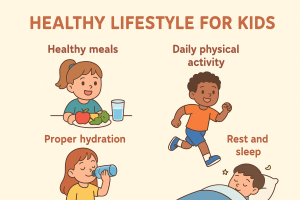
A healthy lifestyle is essential for children’s development. For this, sufficient physical activity and proper nutrients are necessary. 1. Healthy Breakfasts and Meals Breakfast is the most important meal of the day. It gives children the energy they need. In today’s fast-paced world, it is worth looking for quick and healthy recipes. Tips for everyday routines: Whole grains: Oatmeal, whole wheat bread, or muesli provide long-lasting energy. Fresh fruits and vegetables: Apples, bananas, berries, cucumbers, or bell peppers — they are full of vitamins. Simple protein sources: Eggs, yogurt, cheese, chicken breast ham. I shared some recipe ideas in one of my previous blog posts: https://letsgonatasa.com/5-healthy-and-easy-breakfasts-for-kids/ 2. Daily Physical Activity It is good for children to spend a lot of time outdoors and to be active. They have much more energy than adults, so it is often difficult to keep up with them. Still, it is worth incorporating physical activity into everyday life, even a walk in the park, cycling, or visiting the playground. We often coordinate with the mothers of my daughter’s friends so that we all go out together. During this time, the children run and play together, and we don’t get bored either because there is someone to talk to. Even walking or cycling to school or kindergarten with your child counts as good exercise. 3. Hydration It is often difficult to get children to drink water. At least in our case, it is quite challenging, so we often solve sufficient hydration in a playful way. We compete to see who drinks their glass of water first. Of course, this is done slowly to avoid choking. When I drink, I also pour half a glass of water for my child, and we sip it together. Tips: Amount: Younger children should drink 5–6 glasses per day, older children 7–8 glasses. Avoid sugary drinks: They can damage children’s teeth, and if they always receive soda, they won’t appreciate water as much, and it may fill them up. Motivation: Colorful cups, fun straws, or personal water bottles can encourage regular drinking. 4. Rest and Sleep Adequate sleep is essential for physical development, attention, mood, and the immune system. Tips: Sleep needs: Toddlers need 10–12 hours, school-aged children 9–11 hours of sleep. Evening routine: It is easier to maintain the usual routine, so the child knows what to expect. In our case: after dinner, about fifteen minutes of TV, then we go for a bath. After bathing, a little shared play and conversation, then bedtime story (from a book) and sleep. Screen-free time: Before going to bed, we avoid screens. In our household, there are no screens 1–1.5 hours before sleep. 5. Simple Healthy Habits Everyday small habits shape children’s lives and form the foundation for a healthy lifestyle in the long term. Tips: Hygiene: Wash hands before and after meals, brush teeth in the morning and evening. Tidying up: Involve children in putting away their toys — it develops responsibility and organizational skills. In our case, this works best as a game. We compete: while I wash the dishes, can my child clean up their toys in the same time? This way, we avoid arguments. Independence: Give small tasks (for example, pouring water, cutting fruit) to increase their confidence and skills. 6. Vitamins I would not call this mandatory, but if we feel the child does not get enough vitamins from food, we can supplement. Omega-3 fatty acids: Important for brain development and heart health. They support learning and memory functions. Vitamin C: Strengthens the immune system. Very helpful during cold weather and at the beginning of school/kindergarten. Vitamin D: Helps with calcium absorption, which is essential for the health of bones and teeth.
Healthy Habits
How Much Screen Time Is Recommended for Children?
These days, it’s almost impossible to avoid screens — tablets, phones, and computers are everywhere. I often get questions from parents (and ask them myself too): How much screen time is okay for kids? How do we find that balance where it’s not harmful, but maybe even useful? Why Screen Time Needs Balance A child’s attention, imagination, and development all depend on what fills their days. And while digital games can sometimes get a bad reputation, they can actually be great — if used wisely. Many of them help develop logic, memory, and problem-solving skills. Still, it’s important to remember that nothing replaces outdoor play, real movement, and time spent with family. I always try to make sure screens don’t steal the time we could spend drawing, baking, or playing hide and seek. It also matters what children watch or play. On my website, I share some educational and age-appropriate games that can be enjoyed safely. It’s worth finding platforms designed for kids — this way, you don’t have to constantly check over their shoulder to see what’s on the screen. How Much Screen Time is OK? Of course, every child is different, but here are some general guidelines that have worked for us: Under 3 years: Very little screen time, and only together — maybe a short cartoon or story before bed. Ages 3–6: Around 30–60 minutes a day, ideally broken into small chunks. Ages 6–12: Up to 1–2 hours, balanced with active play and outdoor time. These aren’t strict rules, just helpful reference points. Honestly, it’s nearly impossible to follow them perfectly every day — and that’s okay. What really matters is that screens don’t replace play, learning, or family time. Making Screen Time More Meaningful Instead of banning screens completely, we can turn them into something positive. Here are a few ideas that work well for us: Choose calm, age-appropriate stories instead of loud or overstimulating shows. Play or watch together. It’s more fun and gives you something to talk about afterward. Discuss what they’ve seen. Ask questions like “What did you like about that?” or “What do you think will happen next time?” Set clear routines. At our home, screen time comes after dinner and bath — about 20 minutes of cartoons before bedtime. It makes things predictable, and there’s no arguing about when it’s allowed. In Summary Screens are part of modern life, and that’s okay. The goal isn’t to ban them, but to use them thoughtfully. With moderation and a bit of planning, screen time can be educational, fun, and even bonding. When we pay attention to how much time kids spend — and what kind of content they see — screens can complement, not replace, the real joys of childhood: play, imagination, and time together.